
Waking to the Magic
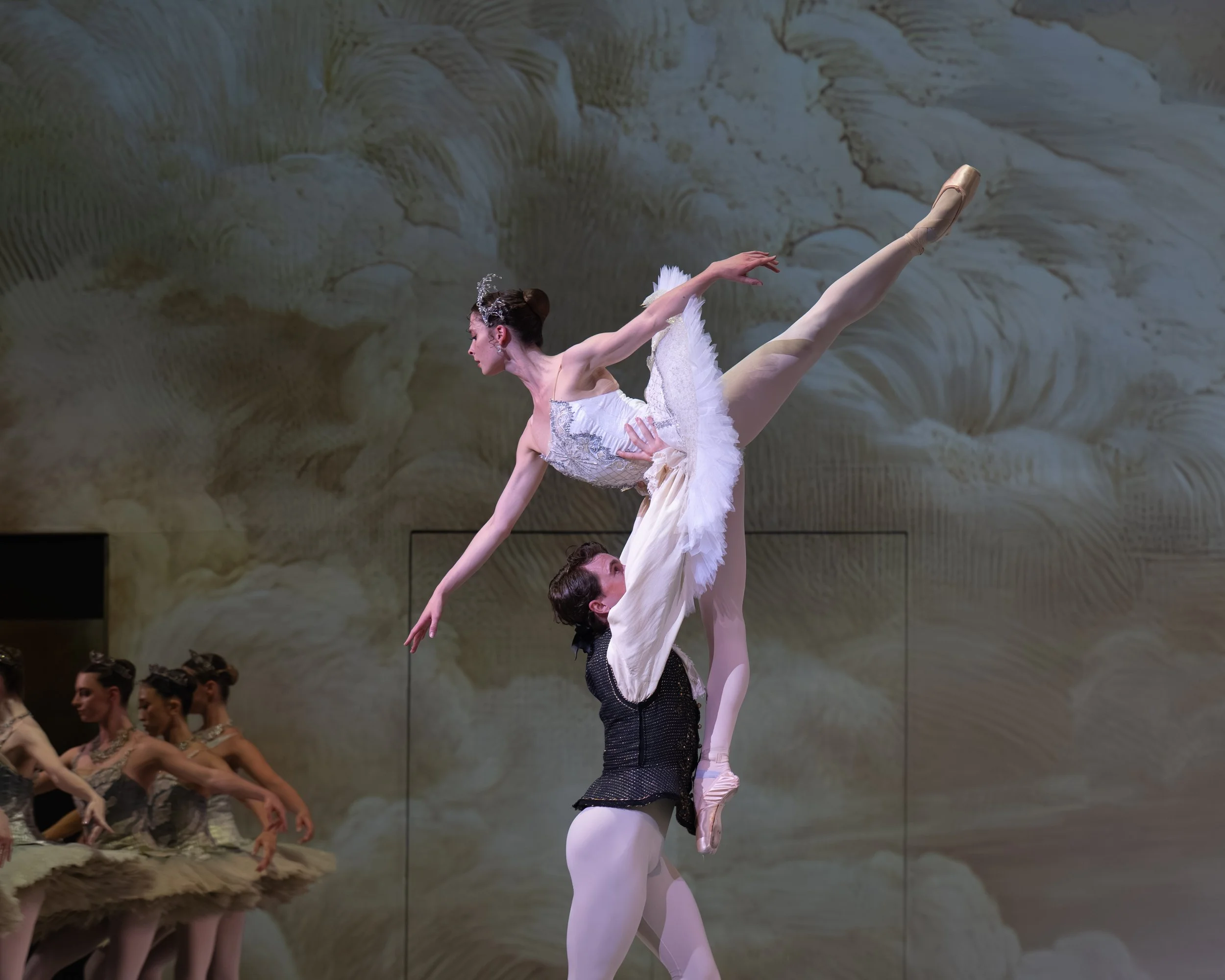
Emma Hawes as Aurora and Aitor Arrieta as Prince in Kenneth MacMillan’s The Sleeping Beauty ©Photography by ASH
“Her authority was unmatched and her on-stage presence was mesmerising.”
Waking To The Magic
English National Ballet’s The Sleeping Beauty at Royal Albert Hall, 25 June 2026.
★★★★
WRITTEN BY DR. NO/NADYA OSTROFF, 18.07.2026
Once upon a time, on a balmy midsummer’s night and in a land now impossibly far away, I danced the wedding scene as a divertissement as Princess Aurora for my graduation from ballet school. From summer schools to repertoire to masterclasses, I recognised almost every female character’s solo by sight and by muscle memory. Approximately a hundred years later, I had awoken on another evening to find myself curiously watching the same characters perform Kenneth MacMillan’s choreography in the majestically grand Royal Albert Hall. The chairs swivelled but alas, there was not enough room in the aisles for me to dance along.
Once again, it was a very warm night; the heat in the auditorium could have been sleep-inducing had the dancing not been so captivating. If the audience were sweltering and felt exhausted from the heat after two and a half hours, they did not succumb judging from the rapturous applause. Even the children in the auditorium were spellbound by the dancing.
It is the female characters that largely bear the responsibility of carrying the tale, and in this production they ruled supreme. The full ballet requires the stamina of mountain marathon runners and the finesse of hand-embroiderers, requiring the finest stitching on both sides of the cloth. Emma Hawes as Aurora took every opportunity to impress throughout the arduous two-act, four-scene ballet. Her strength, sparkle and charm were as spirited in the wedding scene as they were on her sixteenth birthday. The famous Rose Adagio was danced with the appearance of effortless grace and without the start-stop affectation of taking the arm of each suitor. Anri Sugiura as the Lilac Fairy was outstanding by any measure, her sophisticated use of understated gesture conveyed power over the melodramatic Carabosse (James Streeter). Her authority was unmatched and her on-stage presence was mesmerising. The challenges of MacMillan’s uncharacteristically ethereal choreography were wonderfully danced by the cast, among the array of themed solos and pas de deux Yihan Qin was an enchanting Fairy of the Crystal Fountain, while Georgia Bould and Rhys Anthony as the White Cat and Puss in Boots and Katja Khaniukova and Rentaro Nakaaki were delightful crowd pleasers.
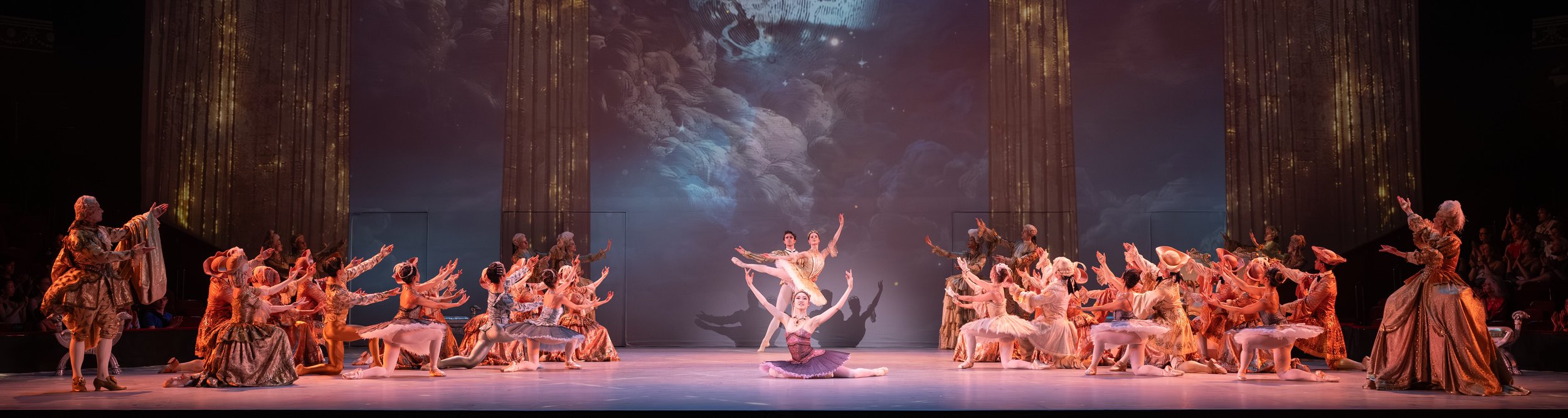
English National Ballet Dancers in Kenneth MacMillan’s The Sleeping Beauty ©Photography by ASH
Having seen the thoughtfully staged Swan Lake in-the-round in the same venue, it was with some disappointment that I found the same level of care had not been taken with the scenery (or indeed the lack of it). The digital projections seemed at odds with the rest of the production values and jarred experienced professionalism of other aspects. A ballet should be a Gesamtkunstwerk and a seamless experiential journey; technology should enhance, not detract from, the performance and the clunky ‘digital explaining’ at times ruined the immersive personal journey.
The costumes were wonderfully enchanting though slightly confusing historically, taking into consideration the lapse of a hundred years at court between acts, the lack of a proscenium arch and traditional stage mechanics at the historic venue could have been made into an opportunity for some innovative, creative reworking. As it was, the children among the mostly adult audience remained spellbound by the dancing throughout the full-length ballet as a hundred years spun by in the space of a rectangular stage and a couple of hours. The Sleeping Beauty is a beautiful and brilliant dream that has lasted more than a century. Balletomanes, new audience members and dancers young and older, stayed awake to celebrate life, love, and the beauty of dance together.